
How Do I Make My Asphalt Parking Lot ADA-Compliant?
Key Takeaways:
- The ADA is a set of civil rights laws that safeguard individuals with disabilities from discrimination.
- The ADA also requires businesses and other organizations to provide appropriate accommodations to individuals with disabilities.
- To make an asphalt parking lot ADA-compliant, you will need to designate a certain number of handicap-accessible parking spaces and install signage indicating the location of these spaces.
- Parking lots must be level to meet ADA requirements.
- Use a laser level to check for irregularities.
- A non-slip surface is important for safety and will make the parking lot easier to maintain.
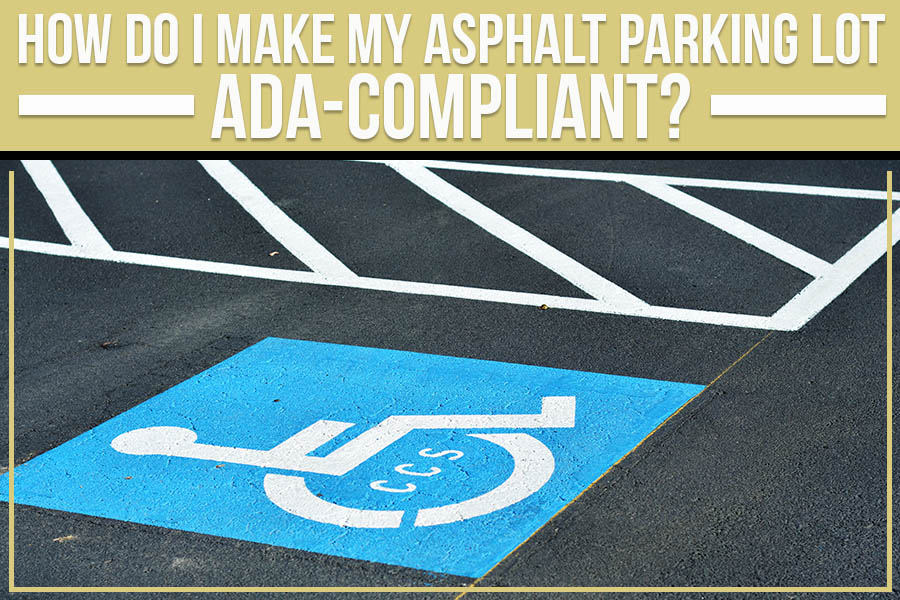
- Accessible parking spots should be near the property entrance and indicate that only handicapped individuals can park there.
- You will also need at least five feet of space on either side of the spot for wheelchair users. This is so people can easily get in and out of their cars.
Making an asphalt parking lot ADA-compliant can seem daunting, but it doesn’t have to be. We’ll explain everything to make your parking lot accessible for all. We will cover handicapped parking spaces, surfaces, and signage. We will also discuss the ADA and what it means for business owners. By following our guidelines, you can make your asphalt parking lot ADA-compliant and ensure everyone has access to your property!
What to Know about ADA?
The Americans with Disabilities Act represents a set of civil rights laws that safeguard individuals with disabilities from discrimination. The ADA prohibits discrimination against individuals with disabilities in all areas of public life, including employment, education, transportation, and access to public facilities. The ADA also requires businesses and other organizations to provide appropriate accommodations to individuals with disabilities.
To make your asphalt parking lot ADA-compliant, you will need to designate a certain number of handicap-accessible parking spaces, depending on the size of your lot. You will also need to install signage indicating the location of these spaces and provide a smooth, level surface leading from the parking space to the building entrance.
If you have an existing asphalt parking lot that does not meet these requirements, you will need to make some modifications. Here’s what to do:

Level the Ground
The first step to making your asphalt parking lot ADA-compliant is to ensure the ground is level. Uneven pavement can create trip hazards for people with disabilities, so it’s important to ensure that the surface is level and even throughout. You can check for irregularities with a laser level or transit. Once you’ve identified any areas that need to be adjusted, use a power trowel or hand-held tamper to level out the ground.
If there are any large cracks or holes in the pavement, you’ll need to fill them in before proceeding. Use a cold patch material or hot asphalt to fill in defects, and then use a tamper to compact the area. Once the surface is level and smooth, you can paint stripes or markings to designate accessible parking spaces, wheelchair ramps, and other accessible features.
Create a Non-Slip Surface
One way to make your asphalt parking lot ADA-compliant and safer for everyone is to create a non-slip surface. You can accomplish this by texturing the asphalt or adding a seal coat. A textured surface will provide more traction. A seal coat will create a barrier protecting the asphalt from weather damage and wear. Another option is to add a layer of gravel or stone chips to the surface of the asphalt. This will create a non-slip surface that will be durable and easy to maintain.
Have Handicapped Parking Spots Near the Entrance
Ensure to have handicapped parking spots near the entrance of your property. This will ensure that people with disabilities can park close to the building and easily access the entrance. You should also have a sign that indicates that these spots are for disabled individuals only.
If you have a large parking lot, you may consider having a designated handicapped parking area. This area should be close to the building’s entrance and have easy access to sidewalks or ramps. The designated accessible parking area should also have signage that indicates that it is for disabled individuals only.
Make the Parking Spots Wide Enough
Ensure that your parking spots are wide enough. ADA requires that all parking spaces be at least eight feet wide. This may seem like a lot, but achieving this width is not as difficult as you think. You can restripe your parking lot, so the spaces are wider than before. You will also need at least five feet of space on either side of the spot for wheelchair users. This is so people can easily get in and out of their cars.
The Lines Must Be Prominent and Visible
The lines must be prominent and visible so drivers can easily see where they need to park. They also need to be thick enough to be seen from a distance. If the lines are not visible, it will be difficult for drivers to know where to park.
You must paint the lines with a reflective material so they can be seen at night. This is important because many people who have disabilities need to use their car at night.
The lines must be placed in such a way that there is enough space for wheelchair users to get in and out of their cars. The lines must also be placed so wheelchair users can easily access the sidewalk.
How will ADA Compliance Benefit Your Business?
ADA compliance will also benefit your business. Many people with disabilities stay at home because they cannot find businesses accessible to them.
If you make your business accessible, you can tap into a new customer base. People with disabilities have spending power, and they patronize businesses that are accessible to them.
ADA compliance will also make your business more attractive to employees. Many people with disabilities want to work but cannot find employers willing to make the necessary accommodations. To attract the best and brightest employees, you must show that you are an inclusive employer.
ADA compliance shows that you are committed to providing equal access to all of your customers. This can help you attract new customers and keep the ones you already have.
ADA compliance can also help you avoid lawsuits. If someone with a disability is injured on your property because it was not ADA-compliant, you could be sued.
Conclusion
Making your asphalt parking lot ADA-compliant is necessary to ensure that all visitors to your business or facility have equal access to your services. Making these modifications will provide a safe and accessible environment for all.
Check out our blog post about why you need to start fixing potholes.
ADA-compliant parking lots are important for businesses to ensure everyone can access their services. Laurel Asphalt, serving Bedford, is experienced in creating and maintaining ADA-compliant parking lots, making us the ideal company for this type of service. We’ll work with you to create a parking lot that meets all the ADA requirements, ensuring that your business is accessible to everyone.
Get a Free Estimate Today!
Key Takeaways:
- Decorative stamped asphalt is a type of asphalt used for decorative purposes.
- It can be used for hardscapes, driveways, patios, and more.
- There are many benefits to using decorative stamped asphalt, including its durability and ability to withstand weather and wear and tear.
- Ideas for hardscaping include stamping it, staining the asphalt, and using acrylic colors.
- Always choose an experienced pro when it comes to decorative stamped asphalt.
There’s something about decorative and stamped asphalt that makes it appealing for homeowners. Maybe it’s the fact that you can create any pattern or design you want or that it never looks outdated. Whatever the reason, using decorative and stamped asphalt is a great way to add some pizzazz to your hardscape! Here are a few ideas by Laurel Asphalt to get you started.
Why Is Asphalt the Right Choice for Construction & Hardscaping?
Asphalt is a popular choice for construction and hardscaping because it is durable, long-lasting, and easy to maintain. It can also be decorated, stamped, and colored to create any design you want! Asphalt is excellent for driveways, sidewalks, patios, and more.
Advantages Of Stamped and Decorative Asphalt:
Stamped asphalt offers many advantages over other materials, including reduced maintenance requirements, a long lifespan, and cheaper costs. Additionally, it’s fantastic for those who live in colder areas.
Since heated asphalt softens, imprinting a variety of patterns is easy and improves the material’s overall resilience. The surface gains an astonishing degree of toughness as a result. Additionally, stamped asphalt blends cutting-edge coating technologies with the durability and adaptability of asphalt.
It can resist wear and tear from traffic and extreme weather conditions and provide a better vehicle grip. It also doesn’t require a lot in the way of maintenance, which is ideal for busy homeowners. A yearly sealcoating is usually all needed to keep it looking its best. Additionally, the installation process is short so that you may have a durable, reasonably priced surface in a few days.
Factors To Consider Before Thinking About Asphalt Stamping:
If you are considering stamped asphalt for your hardscape, then there are a few things that you need to keep in mind. First, it is essential to consider the environment and temperature. Stamped asphalt is not recommended for areas with hot climates because the heat can cause the stamps to fade.
Second, you should factor in the cost. Stamped asphalt is more expensive than regular, but it is worth the investment if you want a unique and beautiful hardscape.
Finally, you need to consider the installation. Stamped asphalt is more challenging to install than regular asphalt, so you must be sure you have a professional installer.

Stamped And Decorative Asphalt Ideas for Hardscaping:
Idea 01: Stamp Your Asphalt with A Unique Design
Stamped asphalt works well for imitating pavers and blocks. You may choose your preferred paver texture and leave your home driveway’s original asphalt tones. Here are a few examples of designs we can offer:
- Chevron design: This design is achieved by cutting V-shaped lines into the asphalt. This stamped asphalt style is ideal for those looking to give their property a bit of refinement.
- Herringbone design: This design is made by working two colors of asphalt together in a crisscross pattern. This old design is making a comeback in many modern-day stamped asphalt driveways.
- Basket weave design: This is one of the more intricate designs, and it’s achieved by placing two colors of asphalt in a crisscross pattern, then adding a third color placed over the top in a diagonal pattern.
- Cobblestone design: The combination of random Frisco and stone with earthy asphalt staining is a luxurious budget match.
- Slate design: This design uses a slate stamping mat.
- Brick design: As the name suggests, this design is made to look like bricks. It’s achieved by using a brick stamping mat.
- Illuminated surfaces: You can add illuminated surfaces to your stamped asphalt. This is accomplished by covering the asphalt with a coating of photoluminescent aggregate.
Idea 02: Staining the Asphalt
Asphalt is naturally dark gray or black, and these colors absorb heat, making for a warm evening as the heat is reflected. Adding color to the HMA before paving is one approach to stop that. Stained asphalt has recently gained popularity for municipal color-coded pavement. By adding earthy tones, you may reduce the temperature in the city and make it look more appealing.
There is no reason why stained and stamped asphalt shouldn’t be used together in home hardscapes. After all, they are both pavements. The two methods enhance each other. Stamped asphalt can provide the patterns, while stained asphalt can provide the colors—or vice versa.
Color is not the only way to make stamped asphalt unique. You can also use it to add dimensionality and lighten up an area. For instance, you can create an illusion of depth by using a lighter color for the background and a darker color for the stamps.
Idea 03: Use Acrylic Paints on Asphalt
The more adhesive asphalt paint alternatives are acrylic paints. If you decide against staining your asphalt for any reason, you may always apply paint to highlight the edges of the imprinted grooves further. It is very ambitious yet helpful if the hardscape is a playground for kids.
You can use it to add visual interest to an otherwise flat and dull surface. You can use acrylic paints to create a variety of scenes, from seascapes to mountain ranges. The finest aspect of this approach is how simple and equipment-free it is to execute.
Related: 8 top trends for stamped asphalt in 2022.
Ending Note:
When it comes to decorative stamped asphalt, the sky is the limit. You can choose from various patterns and colors to create a unique look for your home. If you are unsure what you want, you can always consult a professional installer to get some ideas. No matter what you choose, stamped asphalt is an excellent choice for your hardscape.
Ready to get started? Contact Laurel Asphalt serving Altoona, PA, today for a free estimate! Our professional workers would love to help you create a stunning hardscape that will increase your home’s curb appeal.
Key Takeaways:
- Potholes are deep depressions in an asphalt pavement
- Common causes are the elements, improper drainage, and heavy traffic
- If not addressed, potholes can lead to complete pavement failure
- Pothole repair solutions include cold patch, hot mix, and infrared patching
- Laurel Asphalt provides premier asphalt paving solutions in Johnstown.
Asphalt paving is one of the most popular choices for pavement in the United States. Not only does asphalt provide a strong and sturdy surface, but it is also cost-effective.
However, asphalt is not immune to damage, and potholes are a common sight on many roads. If you notice increased damage on your asphalt surface, it’s time to start fixing potholes!
This blog post will disclose signs that your asphalt pavement needs pothole repair and explore some solutions. Keep scrolling to learn more!
What Are Potholes?
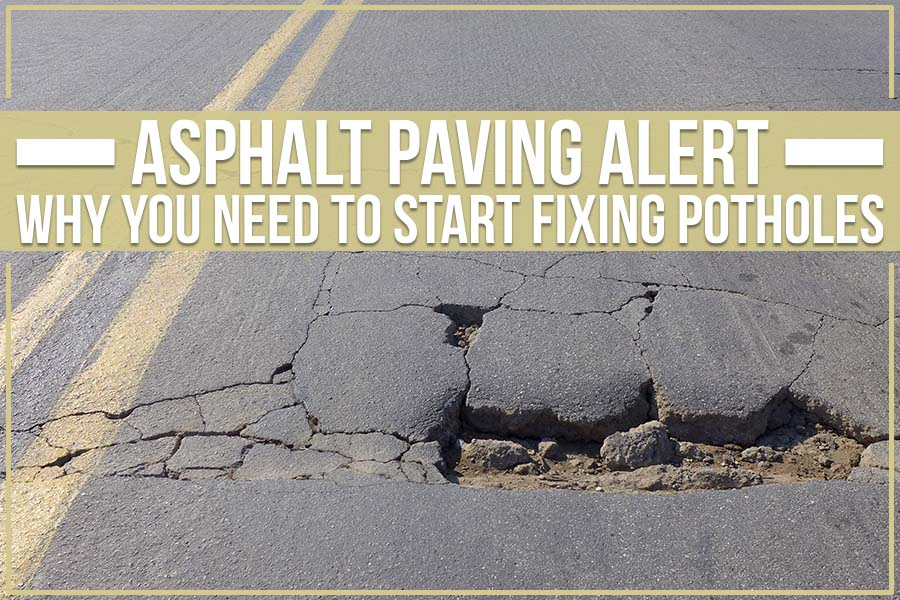
If you haven’t bumped into one, potholes are small craters that form in asphalt. They result from a combination of water and vehicular traffic. Water enters cracks in the asphalt, which expands when it freezes and contracts when it thaws. This process weakens the asphalt and causes it to crumble.
Potholes can range in size anywhere from a few inches to several feet. They usually spring from a pre-existing crack in the asphalt. If you find a pothole on your asphalt paving, it’s crucial to take action as soon as possible. Untreated potholes will only grow larger and cause more damage.
What Causes Potholes?
Two common culprits for the creation of potholes are water and vehicular traffic. Water seeps into cracks in the asphalt, expanding when it freezes and contracting when it thaws. This process weakens the asphalt and causes it to crumble.
Potholes can also be caused by tree roots growing beneath the asphalt surface and by utility cuts made in the asphalt. When vehicles drive over these weak spots, it can cause the asphalt to collapse and create a pothole.
Why Should I Fix Potholes?
Most people will immediately answer this question by pointing out potholes’ obvious safety hazards. After all, no one wants to damage their vehicle or risk tripping over a pothole.
That’s not the only reason to fix potholes, however.
No. 1: Prevention
One minor pothole doesn’t mean a death sentence for your paving. However, if you don’t take care of it immediately, that one pothole can quickly turn into two or three.
Before you know it, you’ll have a full-blown pavement disaster on your hands. It’s much easier to fix potholes as they appear rather than wait until the problem gets out of control. Save yourself the headache by being proactive about pothole repairs.
No. 2: Reduction
Long-term repairs won’t only cost you time but also a good bit of your money. By fixing potholes as soon as they appear, you can save yourself paving costs in the future.
It’s important to remember that asphalt paving is an investment. Like any other investment, you need to take care of it to get the most out. By being proactive about pothole repair, you can extend the lifespan of your pavement and avoid having to replace it prematurely.
No. 3: Appeal
Your asphalt paving is one of the first things visitors see when visiting your home or business. First impressions matter, so you should ensure that your pavement is in good condition. By repairing potholes, you can improve the curb appeal of your property and make it more inviting for visitors.
No. 4: Solutions
Another excellent reason to fix potholes is that several solutions are readily available and easy to implement. Compare that to removing your entire pavement and starting from scratch – it’s a much more time-consuming and expensive process.
What Solutions Are Available?
Suppose you’re fortunate enough to catch a pothole early on. In that case, you’ll have various asphalt repair options. Let’s take a look at some of the most popular methods:
- Cold Patch: This is one of the most common asphalt repair methods. This method involves using a pre-mixed asphalt that comes in a bag – you pour it into the pothole, compact it down, and voila! The asphalt will set and harden over time, creating a seamless repair. However, this is a temporary solution!
- Hot Mix: Hot mix asphalt is a more permanent repair solution. This method involves heating asphalt to high temperatures and mixing it with aggregate. Once it cools, the asphalt will be as strong as new.
- Infrared Patching: Infrared patching is another popular asphalt repair method. This method uses infrared technology to heat up the existing asphalt surrounding the pothole. Once heated, new asphalt can be added to the area and compacted down.
Of course, your asphalt paving isn’t invincible and will eventually need to be replaced. However, by repairing potholes as soon as they form, you can help prolong the life of your asphalt and avoid more costly repairs down the road.
When Should I Consider Replacement?
There’s only so much that regular and rigorous maintenance can do. At some point, your asphalt pavement will reach the end of its lifespan and will need replacement. Aside from potholes, some common signs that your asphalt needs to retire include:
No. 1: Alligator Cracks
As treacherous as their name suggests, alligator cracks are a significant sign that asphalt needs to be replaced. Also known as fatigue cracks, alligator cracks form when the asphalt is weak due to excessive weight or stress. The cracks typically start small but quickly spread and deepen if left unaddressed.
You can repair alligator cracks, but they will only be temporary fixes.
No. 2: Standing Water
Heavy rains can cause asphalt to deteriorate faster. If you notice puddles or standing water on your asphalt, it’s a sign that the asphalt isn’t draining properly and needs urgent attention.
While you can improve your pavement’s slope to facilitate drainage, it’s usually best to consult with a professional asphalt company to determine the problem’s underlying cause and ensure it is properly fixed.
If left untreated, standing water will eventually lead to potholes. These, in turn, will aggravate underlying issues and drive a need for replacement.
No. 3: Faded Pavement
It’s a given that exposure to everything from the elements to vehicular traffic will cause asphalt to fade over time. If your pavement has traded its rich black color for a grey hue, it’s time to investigate the cause.
A professional contractor can tell you if the asphalt needs sealcoating or if it’s time for repaving. Asphalt Institute answers the most frequently asked questions if you’d like more info on asphalt maintenance and rehabilitation.
Conclusion
That was our short and straightforward guide to repairing potholes and asphalt paving. If you’d like some more tips on appeal and function, check out our blog post on how to make your commercial property more driver-friendly.
At Laurel Asphalt, we’re always happy to provide tried and trustworthy services in Johnstown, PA, so feel free to get your free estimate today!
8 Top Trends For Stamped Asphalt In 2022
Key Takeaways:
- Stamped asphalt is a decorative pavement that can add curb appeal and value to your home and commercial building.
- It is chosen for many reasons: it is cost-effective, low maintenance, and environment friendly.
- Stamped asphalt trends in 2022 include returning classic patterns, using new colors and textures, and installing stamped asphalt in unique locations.
Amazingly, we’re already discussing trends for 2022, but here we are! If you’re thinking about having your parking lot or driveway paved shortly, you’ll want to keep these trends in mind. Stamped asphalt is becoming increasingly popular every year as people are looking for ways to add a hint of elegance and luxury to their homes and commercial buildings. In this blog post, Laurel Asphalt will look at some of the most popular stamped asphalt designs for 2022. Keep reading to learn more!
What is stamped asphalt?
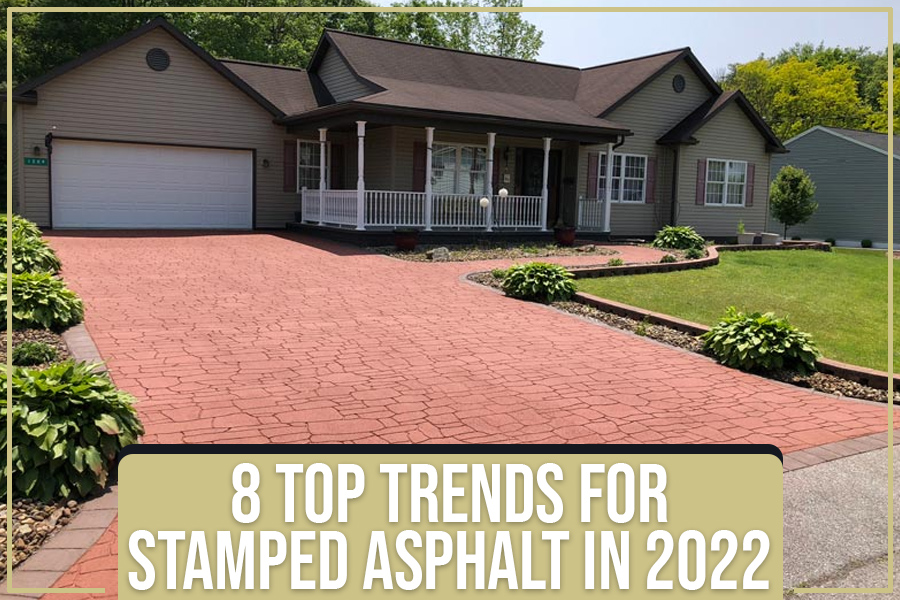
Asphalt stamping is a clever and sophisticated method that turns regular asphalt into surfaces that resemble brick or stone. It is created by imprinting a design into wet asphalt and then adding color or stamps to the design. This type of pavement can be used for driveways, sidewalks, patios, and more.
Process of asphalt stamping:
Asphalt stamping begins with the creation of a design. Once the design is finalized, it is transferred to a large piece of equipment called a stencil. Then combination of heat, a stamping template, and a plate compactor is used to imprint the design into the surface. After the design is stamped, color or stamps are added to create the desired look.
Why stamped asphalt?
There are many reasons to choose stamped asphalt over other types of pavement. Some benefits include:
Stamped asphalt is more durable than regular asphalt:
The process of stamping asphalt makes it denser and more compact, which in turn makes it more resistant to cracking and potholes.
Stamped asphalt is low maintenance:
Once stamped asphalt is installed, there is very little upkeep required. Unlike other forms of pavement, stamped asphalt is stain-resistant and does not require sealing or resealing.
Stamped asphalt is cost-effective:
You may improve the curb appeal of your house without spending a fortune. Stamped asphalt is relatively reasonably priced when compared to other driveway materials. You will spend less money installing it because it is simple.
Stamped asphalt is safe:
It has a non-skid surface that is slip-resistant, making it an excellent choice for driveways, sidewalks, and other areas where people walk. It is also resistant to potholes and cracking, creating trip hazards.
Environment friendly:
Stamped asphalt is environmentally friendly and manufactured from recycled materials. According to the ENERGY STAR Program for Asphalt Pavement, its building process emits up to 80% less CO2 than conventional asphalt paving (EPA, 2012).
Improves curb appeal:
A beautiful driveway or elegant sideways can increase your home’s or commercial property’s curb appeal, increasing its value. Stamped asphalt is a great way to achieve this without spending much money.
Top trends for stamped asphalt in 2022:
Trend 01: The classic herringbone design is making a comeback
The herringbone design was once the most popular choice for stamped asphalt. However, it fell out of favor recently due to its more traditional appearance. However, since more and more people are looking for timeless designs, it is currently making a strong comeback.
It is created by stamping a series of overlapping V-shaped patterns into the asphalt.
Trend 02: The chevron design is perfect for modern homes
The chevron design is a modern take on the classic herringbone design. It is created by stamping a series of overlapping V-shaped patterns into the asphalt. This stamped asphalt trend is perfect for those who want to add a touch of sophistication to their property.
Trend 03: Brick patterns are popular
Brick patterns have always been popular for stamped asphalt. They give off a rustic and old-world charm that is hard to resist. Since they can replicate the appearance of genuine brick pavers, they have recently grown in popularity.
You can use brink pattern stamps to create various looks, from classic brick sidewalks to modern patio designs.
Trend 04: Tile patterns with a pop of color
Tile patterns are another popular choice for stamped asphalt. From traditional tile flooring to contemporary abstract designs, you can use them to produce a variety of appearances.
One of the best things about tile patterns is that they can be customized with a pop of color. This added touch can make your design stand out from the rest.
Trend 05: Printing business names with stamping patterns
Another popular trend for stamped asphalt is printing business names with stamping patterns. This is a fantastic approach to advertise your company and make it simple for clients to locate you.
Professional asphalt paver can do this in many ways, including utilizing stencils and making unique stamps. Whatever method you choose, this is sure to be a hit with customers.
Trend 06: Adding borders with stamped asphalt
Another popular trend for stamped asphalt is adding borders with stamped asphalt. Different border patterns define your space and make it look more polished. There are a variety of different ways to add borders with stamped asphalt. You can use it to create a pathway around your property, or you can use it to create a border around your gardens.
Trend 07: Using two different designs of stamped asphalt
If you want to add a little variety to your stamped asphalt, you can try using two different designs. Unique designs add interest to your space and make it more beautiful. You can use different colors or patterns to create this look.
Trend 08: Illuminated surfaces
This trend is all about creating a surface that is illuminated. This can be done using stamps that create a reflective surface or by adding lights to the asphalt.
So there you have it, the main trends for stamped asphalt in 2022. Be sure to keep these in mind when planning your next project.
At Laurel Asphalt serving Ebensburg, we are experts at asphalt stamping. Regardless of the size or requirements, we complete every job with the highest care and employ high-quality materials.
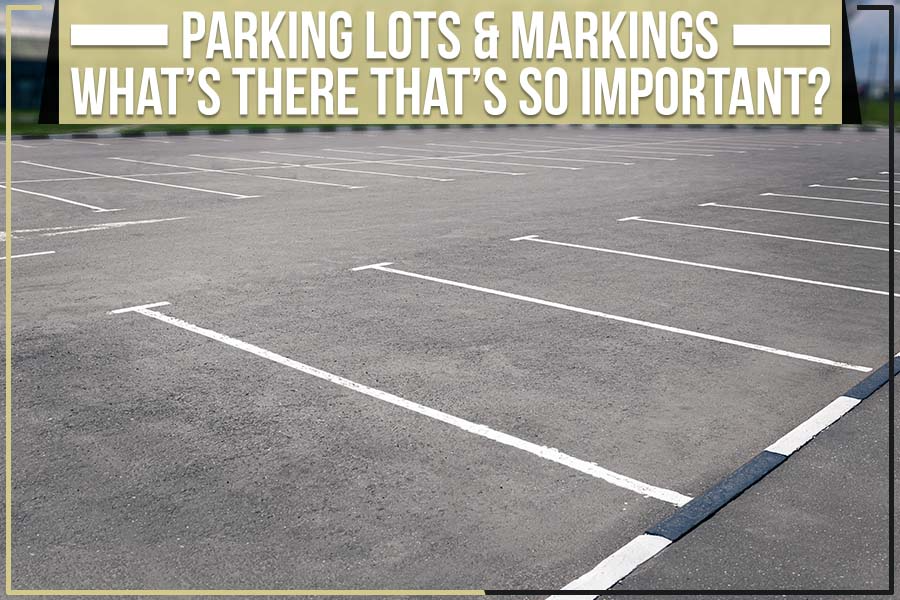
If you own or you’re responsible for commercial paving lot, you appreciate the importance of understanding the parking lot markings on asphalt paving. After all, it’s your job to ensure the safety of everyone who uses the parking lot.
However, for those who have doubts, Laurel Asphalt has compiled a list of reasons to understand parking lot markings.
Keep scrolling to learn more!
No. 1: The Meanings
There are various paint colors used for parking lot markings. The three most common colors are white, yellow, and blue. Red and decorative markings are also used occasionally.
- White and Yellow Parking Lines: The lines for parking spaces are usually white or yellow. Pending curb appeal, local requirements, and sometimes the owner’s preference will dictate the color used for the parking lines. Yellow does provide a slight advantage in the northern climates when the parking lots are partially covered with snow in the winter season.
- White and Yellow Markings: These two colors provide other distinguished uses in a parking lot. Yellow indicates areas where drivers need to use extra caution. These areas can be entrances, exits, speed bumps, curbs designated for no parking, and double yellow lines heavily traveled traffic lanes. White is more commonly used for arrows, crosswalks, and stop bars.
- Blue: Representing handicap parking, line stripers use this color to indicate reserved areas for vehicles with disabilities.
- Red: This color is occasionally used for areas for curbs or diagonal lines to indicate fire lane areas. Yellow is sometimes used in fire lane areas also.
- Decorative Crosswalks: Decorative markings are used many times to highlight the crosswalks to make these walkways more visible for the motorists and pedestrians to provide added alertness for safety. The decorative markings can also provide added curb appeal.
As you can see, parking lot markings help create a safe and organized space for vehicles to park and drive and maintain added safety for pedestrians.
No. 2: Faded Lines
A commercial property owner should understand that faint lines on the asphalt paving are a safety hazard. When the lines are no longer visible, it becomes difficult for drivers to know where to park and where not. This can lead to accidents and damage to property.
As a result, your commercial paving lot will be vulnerable to lawsuits and reputation damage, especially if a person with a disability is involved in an accident. You can avoid this by ensuring that the parking lot markings are always visible.
No. 3: Better Experience
Understanding parking lot markings can also help you provide a better customer experience. For instance, if you have a loading zone, you can make it clear where it begins and ends with the correct markings. This will ensure delivery trucks can park in the designated area without blocking traffic.
You can also use parking lot markings to create more space for handicapped parking or electric vehicle charging stations. By doing this, you can make your business more appealing.
No. 4: Safer Environment
Other components besides stripes and markings on your asphalt pavement can make your parking lot safer. For example, speed bumps can help control traffic and prevent accidents. Speed bumps are usually placed near crosswalks or pedestrian walkways to keep cars from going too fast and hitting pedestrians.
Including curb ramps on your commercial paving lot can make it more accessible for people with disabilities. Curb ramps help people in wheelchairs or with strollers get onto the sidewalk from the street.
Conclusion
A commercial asphalt paving project is a significant investment. You want to ensure that it will last many years and withstand heavy traffic. Understanding parking lot markings and other features will help you make the best decisions for your business.
Laurel Asphalt has been helping businesses with their commercial paving needs for over 25 years. We are a family-owned business that takes pride in our work in Greensburg, Ligonier, Somerset, and Johnstown areas in Pennsylvania PA.

Asphalt surfaces often succumb to the effects of weathering and cracking over time. While some fractures are simply cosmetic, others can lead to bigger problems down the road if left untreated. If you’re handy with a sealant and a caulking gun, you may be wondering what the best way to seal cracks in your asphalt driveway or patio is: hot pour crack sealer or cold pour crack sealer?
Let’s look at each method a bit closer to help you decide which is suitable for your project.
Why is a Sealant Needed?
Sealing pavement cracks is essential because it helps to prevent water from seeping into the cracks and causing further damage. It also keeps out vegetation, dirt, and debris that lead to pavement deterioration.
How Does Hot Pour Crack Sealing Work?
This process involves filling cracks with a hot, melted sealant. This method is often used for pavement cracks that are wider or deeper than ¼ inch. The advantage of hot pour crack sealing is that it can be done in a shorter amount of time and provides a more seamless seal.
Here are some other characteristics and benefits of a hot pour crack sealer:
- It can be used for highways, commercial driveways, parking lots, and main roads
- It can withstand heavy traffic like cars, trucks, and RVs
- It is pricier than cold pour pavement crack sealer but provides a more permanent solution
- The application process takes a shorter time
- It adjusts to weather changes and can withstand extreme temperatures
- Is always asphalt-based
How Does a Cold Pour Crack Sealer Work?
This is a denser material applied at a lower temperature. It is suitable for pavement cracks that are shallower than ¼ inch. The advantage of using a cold pour crack sealer is that it can be applied in wet or dry conditions.
Below are some other characteristics of a cold pour crack sealer:
- It is delivered to the site in liquid form
- It needs more curing time
- It becomes inflexible when dry, which means it can’t adjust to changes in temperature changes
- It offers a temporary solution for severe damages
- It is not as durable due to its inflexibility
- It doesn’t bond with asphalt too well, so there’s a chance you’ll have to get those cracks repaired repeatedly.
What Is the Key Difference Between Hot Pour Crack Sealers and Cold Pour Crack Sealers?
The main difference is the temperature at which each sealant is applied. This temperature difference further affects the cure time, pavement bonding strength, and flexibility of each sealant.
Which Type of Crack Sealer Should I Use?
The pavement crack sealer you should use depends on the cracks’ severity, the area’s temperature range, and your budget.
If the pavement cracks are small and not very deep, you can use a cold pour crack sealer. It is best applied in the fall or spring when the temperature is cool.
However, if the pavement cracks are large or deep, you will need to use a hot pour crack sealer. It can be applied in any temperature range but is best used in the summer when it is hot.
Conclusion:
Laurel Asphalt is a full-service asphalt paving company that provides crack sealing services to homeowners and businesses in Ligonier. If you need high-quality asphalt paving or sealcoating services, please get a free estimate before starting out.
The Joy Of Shooting Hoops: Why Recreation Centers Must Install Community Basketball Courts

Basketball is one of America’s favorite sports, enjoyed by people of all ages and backgrounds. That’s why it’s so crucial for recreation centers to install community basketball courts – so that everyone can shoot hoops!
In this blog post, Laurel Asphalt will explore why community basketball courts are so important. From helping people stay active and healthy to providing a sense of community, there are many benefits to having basketball courts near Mt. Pleasant, MI, in your local recreation center.
So, why are community basketball courts so important? Let’s take a look.
Helps Residents You Stay Fit and Healthy:
You must exercise regularly to promote general health, reduce the risk of chronic diseases, and enhance mental well-being. According to the CDC, only about one-third of Americans get enough physical activity each week.
One way to help increase physical activity levels is by installing community basketball courts. This way, people of all ages can come to the recreation center and shoot some hoops. Not only will this help residents stay fit and healthy, but it will also give them a chance to socialize and have fun.
Boosts Community Morale:
In addition to improving physical health, community basketball courts can also boost community morale. When people come together and have fun, it can make the community a better place to live.
Provides a Sense of Belonging:
In addition to helping people stay healthy, community basketball courts can also provide a sense of community. They can be a great place to meet new people and make friends.
When people feel like they belong, they’re more likely to be engaged in their community. People who experience a sense of belonging have better mental health and general well-being.
Makes Residents Socially Active:
Basketball courts can also help to make residents socially active. A study by the University of Michigan found that people who live in areas with community basketball courts are more likely to be active and engaged in their community.
Have a Positive Effect on Mental Health:
Basketball may contribute to improved mental health. An analysis by the University of North Carolina found that basketball players have lower anxiety and stress levels. Basketball can also help to improve mood and increase self-esteem.
Boosts Property Values:
Another benefit of having a community basketball court is that it can boost property values. A National Association of Realtors study found that homes near recreation facilities, like basketball courts, tend to have higher resale values.
Open for All:
The finest thing about basketball is that it’s a sport for everyone. Unlike some sports, there is no age limit on playing basketball. Whether you’re five or fifty, you can enjoy shooting hoops. Basketball is also relatively inexpensive to play, which makes it accessible to people of all income levels.
Bottom Line:
Basketball is the perfect choice if you’re looking for a recreational activity that will increase your heart rate. Not only is it great exercise, but playing basketball can be a lot of fun. And what could be more enjoyable than shooting hoops with friends and family in your community?
That’s why Laurel Asphalt is proud to offer our services for installing high-quality community basketball courts in Mt. Pleasant, MI. We understand the significance of providing residents with access to recreation, and our courts are built to last. So if you’re interested in adding a little excitement to your neighborhood, call us today for a free estimate!

If you’ve ever had the displeasure of hitting a pothole, you know that it can wreck your day. Not to mention, it’s a safety hazard. So, if you find any on your driveway, you wouldn’t want to waste any time and repair it immediately. But what’s the best way to repair potholes?
When repairing potholes, many assume that the only way to do it is by using hot mix asphalt. However, another option can be just as effective – a cold patch. Laurel Asphalt is a paving maintenance firm in Bedford that provides top-quality asphalt paving and related services.
In this blog post, we will closely examine both methods and compare them to see which is best for your specific needs.
Hot Mix Asphalt
Hot mix asphalt is the most common method for repairing potholes. It involves heating a mixture of aggregate and bitumen to create a hot, gooey substance that can be easily poured into the pothole. The hot mix will cool and harden, creating a solid and durable patch.
Advantages
There are several advantages to using hot mix asphalt for pothole repair, including:
- It’s quick and easy to use;
- It creates a long-lasting repair;
Disadvantages
However, there are also some disadvantages to consider, such as:
- It’s more expensive than a cold patch;
- It requires specialized equipment;
- It can only be used when the temperature outside is above 40 degrees;
Cold Patch
A cold patch is an alternate method for repairing potholes. It’s a cheaper and simpler option that can be done without specialized equipment.
To use the cold patch, you must fill the pothole with an asphalt-based material. It can be done by using a shovel or trowel to fill the hole, then compacting the material with a hand tamper or vehicle tire.
Advantages
Following are some benefits of using a cold patch to repair potholes.
- It is relatively less expensive;
- Cold patch is a simple method that doesn’t require much expertise;
- No special equipment is needed to do a cold patch;
- The cold patch can be used in most weather conditions;
Disadvantages
There are also some disadvantages to consider, such as:
- It’s not as strong or durable as hot mix asphalt;
- It takes longer to set and cure;
- It can’t be used in wet weather conditions;
Which is The Best Method?
So, what’s the best method for pothole repair – cold patch or hot mix asphalt? There is no definitive answer, as each has its advantages and disadvantages. Ultimately, the best choice will depend on your budget, damage severity, and skillset. If you’re confident in your abilities and have the time and money to spare, then hot mix asphalt is the better option. However, if you’re on a tight budget or don’t have the time to wait for the asphalt to cool, then the cold patch is probably your best bet.
Whichever method you choose, make sure you do a good job – nobody likes driving over a pothole! Laurel Asphalt serving Bedford is the firm to call if you need professional asphalt paving services.

When you think of dangers to your business, what comes to mind? Shoplifters? Rogue hackers out to steal your customers’ data? While those threats are real and should be taken seriously, one danger you may not have considered is non-compliance with the Americans with Disabilities Act (ADA). That’s right – if your commercial parking lot doesn’t meet ADA requirements, you could be in for a nasty surprise.
In this blog post, Laurel Asphalt will look at the dangers of ADA non-compliance and some tips for ensuring that your parking lot is compliant. Stay safe and informed – read on!
Danger 1: Fines and Penalties
The first and most obvious danger of ADA non-compliance is that you could be subject to fines and penalties. The U.S. Department of Justice (DOJ) can assess civil penalties of up to $75,000 for a first and $150,000 for a subsequent violation. And that’s not all – the DOJ can also bring a lawsuit against your business, which could result in an injunction ordering you to make your property accessible and pay compensatory damages to people harmed by your lack of compliance.
Danger 2: Lost Customers and Bad publicity
Another danger of ADA non-compliance is that you could lose customers or suffer bad publicity. If potential customers see that your commercial parking lot is not accessible, they may take their business elsewhere. And if current customers find out you’re not in compliance, they may stop doing business with you.
What’s more, if your enterprise is involved in a lawsuit or there’s negative publicity about your lack of compliance, it could seriously damage your reputation.
Danger 3: Employee Lawsuits
ADA non-compliance can also lead to lawsuits from employees. Suppose your employees cannot access all workplace areas due to ADA compliance. In that case, they may file a lawsuit against you. In addition, if an employee is injured because of ADA non-compliance (for example, if they trip on an uneven sidewalk), they could sue you for damages.
Tips For Ensuring Compliance
There are a few vital things you can do to make sure your business parking lot is ADA compliant:
- Educate yourself and your employees about the ADA and what it requires.
- Regularly check for compliance issues and address them immediately.
- Make sure new construction or renovations are done in accordance with ADA standards.
- Keep up to date on changes to the ADA so you can stay compliant.
The Bottom Line
ADA compliance is important for all businesses, but it’s especially important for small businesses. The risks and penalties of non-compliance can be significant, so it’s crucial to take steps to ensure your business complies with the law.
Let Laurel Asphalt Help You Out!
All commercial parking lots in Altoona should be ADA compliant. That’s why Laurel Asphalt makes sure that our team is always keeping up with the latest changes, so we can help you stay compliant. If you need assistance making sure your commercial parking lot is ADA compliant or if you need any other asphalt services, get a free quote from Laurel Asphalt today!

There’s no doubt that commercial properties need to be driver-friendly. Bumpy roads and potholes are a driver’s worst nightmare, so it’s essential to make sure your property is up to par.
We have tips to help you make your property more accommodating for drivers.
1. Remove Potholes
Potholes are not only a pain for drivers, but they can also do severe damage to vehicles. If your property has potholes, ensure they are filled in as soon as possible. Potholes can be filled with materials such as asphalt, concrete, or cold patch. If they are left unrepaired, they will only continue to grow and cause more damage.
You need to hire a professional asphalt repair company to come and assess the damage. They will have the necessary tools & materials to fix the potholes quickly and efficiently.
2. Seal Cracks In The Pavement
If your commercial property has any cracks in the pavement, make sure to have them sealed as soon as possible. Sealing cracks in the pavement is another way to make your commercial property more driver-friendly. Cracks can form for various reasons, such as weathering, vehicle traffic, and tree roots.
Cracks can quickly become potholes if not repaired, so taking care of them as soon as possible is essential.
3. Install Decorative Crosswalks
Crosswalks are essential for pedestrians, but they can also be a great way to add some personality to your commercial property. You can make decorative crosswalks from various materials, such as brick, concrete, and even colored asphalt.
If your property is near a busy street, installing decorative crosswalks is a great way to make it driver-friendly. This will not only make it safer for pedestrians to cross the street, but it will also add to the overall aesthetic of your property. Decorative crosswalks can be found at most hardware stores or ordered online.
4. Add Speed Bumps
Another way to make your property more driver-friendly is to add speed bumps. Speed bumps are a great way to slow down traffic and can help to prevent accidents.
You can make speed bumps from various materials, including concrete, asphalt, and rubber. They can also be found in a variety of sizes and shapes.
5. Add Signage
You can use signs to warn drivers of potential hazards, such as potholes or speed bumps. You can also use them to provide information about parking regulations. Signs can be found at most hardware stores.
At Laurel Asphalt serving Somerset, we know that an incredible drive starts with an excellent surface. That’s why we take care in every job we do – from the initial consultation to the final paving.
Not only does our asphalt look great and feel smooth, but it’s also incredibly durable. You don’t have to consider cracks or potholes forming in your driveway anytime soon. Plus, our seal coating will keep your driveway looking new for years to come. We also provide decorative crosswalks to make your road experience even better! Get your free estimate now!
Connect with us


